Pages

Thursday, 25 August 2016

Making Ginger Beer.


Aim: I want to find out how to make Ginger Beer.


Equipment: Plastic bottle, Bowls, Funnel, Fine sieve, lemon swisher, knife, tablespoon, cheese grater, cheese cloth, heatproof container


Ingredients: Ginger peeled, Sugar, Fresh lemon juice, Yeast, Water.


Instructions: Put first measure of sugar in warm water to dissolve, add yeast and stir. Place in warm place to start working.
Finely grate or slice rind from 2 lemons and place in a heatproof container with the 1 cup of sugar and the dried ginger. Pour over 1 cup of boiling water and leave to steep for 10 minutes. Strain into 1.5 L plastic bottle in which the ginger beer will be made. Top up bottle with cool water to near top so that final temp is approx. body temp. Add yeast to bottle as soon as it shows signs of working, ie. it foams. Cap bottle tightly. Mix thoroughly and put in a warm place. Leave until bottle becomes undentable. Depending on the yeast this can take anything from 12 hours to 3 days, but best to check regularly, as I guess there is a risk of explosion with this! Refrigerate until thoroughly chilled and OPEN WITH GREAT CARE!


Results:


What is the stuff at the bottom:
when I looked at the bottom I saw the yeast that had eaten up all the sugar to make the alcohol and its was like sludge. 


What does it smell like:
When i smelt the Ginger Beer it had a very strong ginger smell with also a bit of a sugary smell

What does it taste like: When i tasted the Ginger Beer it tasted very sour and gingery, the yeast has eaten all the sugar so it didn't have much of a sweet taste.


What happens if you shake it:
When i shook the bottle fizzy bubbly fluffy stuff was at the top of where the Ginger Beer Finished.

Discussion

What is yeast? Yeast is a living fungus that likes to eat things like sugar and the stuff in bread.
What did the yeast do to the Ginger Beer? The yeast ate the sugar which then made alcohol and carbon dioxide 
What are some good uses of yeast? Bread, Mar mite, other alcohols and others
What are some bad uses of yeast? Athletes foot, fungus and other things 
What are some interesting questions that I would like to find out about this experiment?
Why does the Ginger beer not rote: because of the lemons which helps it not to rote.
Why does the Ginger beer get stronger with the taste when u leave it longer:Yeast in the beer, if still active, could be cleaning up some byproducts they didn't get to during fermentation. High Alcohols can improve in flavor after some time in cool, dark storage

Yeast is a living fungus that likes to eat things like sugar and the stuff in bread.
The yeast ate the sugar which then made alcohol and carbon dioxide.
Yeast makes good things for bread Mar mite, other alcohols and others.
Bad uses of yeast is athletes foot, fungus and other things.
I would like to find out why Ginger beer does not rote. It doesn't rote because of the lemons which also helps it taste good. I would also like to find out why ginger beer taste stronger while you leave it for a long time. Yeast in the beer, if still active, could be cleaning up some byproducts they didn't get to during the fermentation. High Alcohols can improve in flavor after some time in cool, dark storage.




Tuesday, 5 July 2016

Welcome to my very own blog for learning. I look forward to sharing my learning with teachers, my school, my family and friends anywhere.

Thursday, 19 May 2016

How the Earth was made


YouTube clip on how the Earth was made


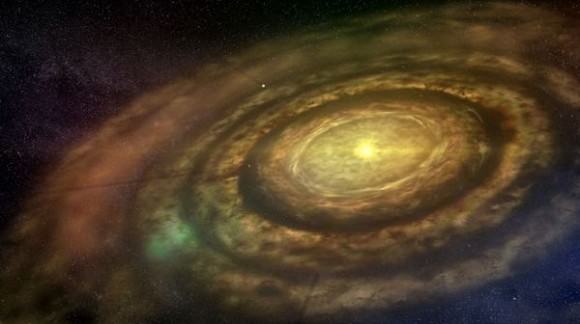
  • 4.5 billion years ago the sun was surrounded by a cloud of dust

  • the dust cloud cooled and formed minerals

  • the minerals began to clump together, held together by static electricity
  • minerals stick together to make rocks and then the rocks stick together to make boulders then the boulders stick together and eventually it will form a plane

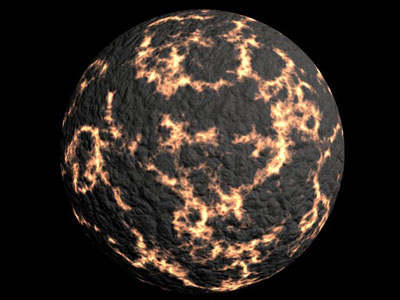
  • 30 millions year later after rocks/minerals forming together, the Earth was made

  • then the earth melted into a big ball of lava

  • all the metals sank, and all the rocks floated


  • the outside cooled and formed the crust of Earth
  • then another planet crashed into Earth
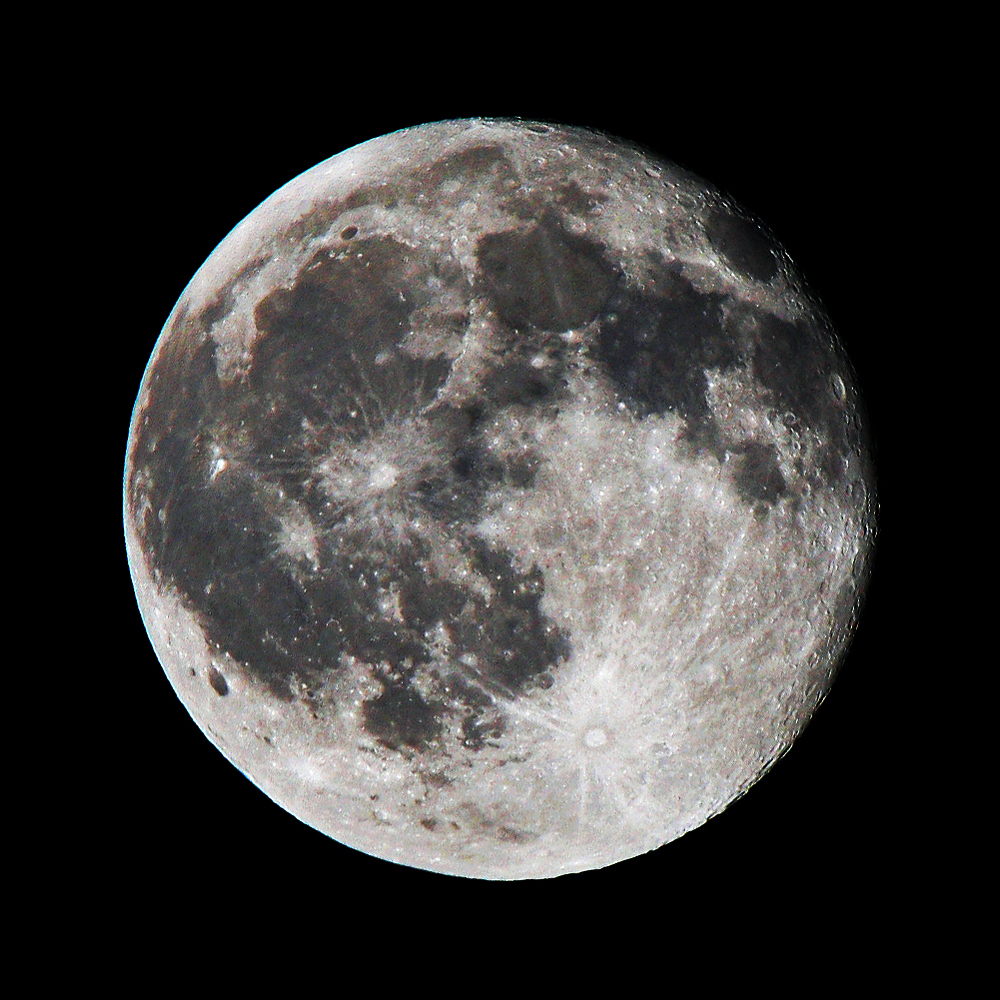
  • all the rocks blown into space were collected together to make the Moon
Image result for moon

  • every time a meteorite hit the forming earth, it bought a little drop of water to earth
  • after years and years, billions of meteorites formed the oceans and rivers
  • a meteorite crashes into earth and it contains a chemical called an Amino Acid
  • the Amino Acid formed long chains and is now called protein
  • protein can replicate them self and when it replicates them self we call it DNA
  • DNA made bacteria 
  • bacteria breathed out there own gas called oxygen


    Tuesday, 12 April 2016

    Hands On Fire 2016


    Aim: I want to safely set my hands on fire


    Equipment: Safety glasses, box, water, hose, detergent, lighter


    Method

    Step 1:

    1. Be safe
    2. safety glasses on
    3. roll up long sleeves
    4. Tie up your hair (No hair dangling down)
    Step 2: Wet your hands and your wrest up to your elbows

    Step 3: Get a scoop of bubbles

    Step 4: Move away from the box

    Step 5: Hold the bubbles at eye level as your far away from your face/body as you can

    Step 6: To put out the fire SLOWLY open your hands


    Results:


    I was to scared to do it but it looked pretty cool


    Thursday, 7 April 2016

    Walking In Straight Lines


    Aim: I want to find out if I can walk in a straight line without my senses.


    Hypothesis: I predict that without my senses I cant walk in a straight line.


    Equipment:

    1. Blindfold to stop us from seeing
    2. Cotton wool to stop us from hearing and smelling
    3. Bucket for our head to stop the wind


    Method: I am going to attempt to walk in 200m straight line to a stake in the ground.

    Put some cotton wool up your nose to stop yourself from smelling that lovely baking smell that will help you with your direction.


    Results: Not sure who made it but it was really hard because you think your going straight but your not and you get a bit scared because you don't want to walk into a tree. Its was really fun and I enjoined it.


    Thursday, 17 March 2016

    Burning Magnesium

    Aim:
    I want to find out what happens to Magnesium when you burn it.

    Hypothesis:
    I predict that when you burn Magnesium it will turn into ashes.

    Equipment:
    Heat Mat, Bunsen Burner, Scissor Tongs, Magnesium, Lighter and Safety Goggles.

    Method:

    1. Get equipment
    2. Put on safety goggles
    3. Put down your heat mat
    4. Connect you Bunsen Burn to the gas tap
    5. Close the air hole on the Bunsen Burner
    6. Ignite the light
    7. Turn on the gas
    8. Open the air hole on your Bunsen Burner
    9. Hold the Magnesium in the Scissor Tongs
    10. Put the Magnesium into the blue flame
    11. Observe what happens
    Results:


    When I burned solid, shiny grey Magnesium in the blue Bunsen burner flame it formed a bright, light white and lasted for 5-6 seconds. Then it burned out. Some white powder was left over.


    When magnesium is in its metal form it will burn very easily in air. However, in order to start the reaction (the burning) the magnesium metal needs a source of energy. The flame provides a source of heat so that the magnesium metal atoms can overcome their activation energy. Activation energy is the minimum energy required in order for a chemical reaction to proceed. When the magnesium metal burns it reacts with oxygen found in the air to form Magnesium Oxide. A compound is a material in which atoms of different elements are bonded to one another. Oxygen and magnesium combine in a chemical reaction to form this compound. After it burns, it forms a white powder of the magnesium oxide. Magnesium gives up two electrons to oxygen atoms to form this powdery product. This is an exothermic reaction. An exothermic reaction is a term that describes a chemical reaction in which there is a net release of energy (heat).
    http://chemwiki.ucdavis.edu/Under_Construction/Demonstrations/Burning_Magnesium


    Conclusion
    My hypothesis was that it was going to go into black ashes. I was incorrect. It turned into a glowed bright light white.


    Evaluation
    Other experiments related to this I could do are:

    • Do all metals glow brightly?
    • How hot did the magnesium get before it reacted?
    • Did it make any other chemicals?
    • Why did it have a white light and not blue or green?
    • What would happen if we used a chunk of Magnesium?
    • What would happen if we used powered Magnesium?


    Thursday, 10 March 2016

    How to write a science report

    Aim:
    This is what I want to find out

    Hypothesis:
    This is an educated guess.

    Equipment:
    This is a list of stuff I need

    Method:
    These are step-by-step instructions.

    Variables:
    These are factors that can change the results

    Results:
    These are my observations (what I can see, smell, feel, hear, taste)
    I need to do my results in a table.

    Analysis:
    This is where you need to perform any calculations
    I need to do a graph

    Discussion:
    This is where I explain the results and I answer the Question "Why"

    Conclusion:
    This is where I say if my hypothesis was correct.

    Evaluation:
    This is your reflection on the investigation

    • If something went wrong, what was it and how did I fix it
    • Were there any anomalies (weird results that didn't fix the pattern)
    • What were some of the problems and how could you fix them in the future
    • Has your investigation raised any challenging questions?